Smooth Radiance: Crafting an Elegant Handwritten Identity
In the crowded world of digital design, finding a typeface that feels genuinely human can be a challenge. You want something that carries the warmth of a personal note but retains the clarity needed for professional branding. This is where Smooth Radiance enters the conversation. It is not merely a set of characters; it is a signature font designed to bridge the gap between casual elegance and polished professionalism. If you have been searching for a typeface that mimics the fluidity of natural handwriting without sacrificing legibility, this font offers a compelling solution for your creative toolkit.
Understanding the Visual Personality of Smooth Radiance
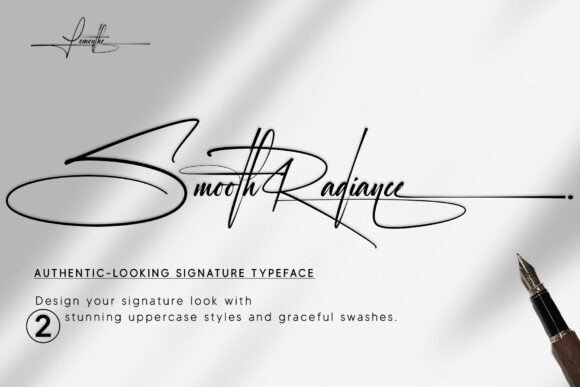
At its core, Smooth Radiance is defined by its fluidity and grace. Unlike rigid geometric typefaces or overly chaotic grunge fonts, this signature font strikes a delicate balance. It features a natural flow that mimics the movement of a felt-tip pen or a smooth fountain pen on high-quality paper. The strokes are confident yet soft, avoiding the scratchy or jagged edges that often plague lesser script fonts.
One of the most practical aspects of this premium font is its versatility in form. It comes equipped with two distinct uppercase variations. This allows you to change the look of a logo or a headline simply by swapping out the capital letters, giving you two distinct "voices" within the same font family. Furthermore, the inclusion of several stylistic alternates and sets means you are not locked into a single aesthetic. You can customize ligatures and specific letters to ensure that your typography feels unique to your specific project. This level of customization is usually reserved for high-end commercial font packages, making Smooth Radiance a valuable asset for designers who value control.
Strategic Applications: Where Smooth Radiance Shines
Choosing the right typeface is less about what looks "pretty" and more about context. A handwritten font like Smooth Radiance excels in specific environments where emotional connection and personality are paramount. It is a tool for storytelling, and knowing where to deploy it is key to successful modern typography.
Branding and Logo Design
For entrepreneurs and small business owners, your logo is often the first handshake with a potential customer. Smooth Radiance works exceptionally well for brands that want to appear approachable, boutique, or artisanal. Think of a local coffee roaster, a high-end florist, a boutique clothing line, or a wellness coach. In these contexts, a cold, corporate sans serif font might feel out of place. However, Smooth Radiance conveys a sense of care and craftsmanship. It suggests that there is a human behind the business who pays attention to detail. When used in logo design, it creates an immediate sense of intimacy that geometric fonts struggle to replicate.
Wedding Invitations and Printed Materials
The stationery industry relies heavily on script and signature fonts, but legibility is often a casualty. Smooth Radiance avoids this trap. Its natural rhythm makes it ideal for wedding invitations, save-the-dates, and event programs. The elegance of the script elevates the perceived value of the event, adding a touch of luxury to the printed materials. Because the font includes various stylistic sets, you can customize the invitation suite so that the "R" in the bride's name looks slightly different from the "R" in the groom's name, adding a bespoke touch that clients appreciate.
Digital Presence and Social Media
In the realm of web design and social media graphics, standing out in a scroll is difficult. Smooth Radiance acts as a powerful display element. It is rarely suitable for long body paragraphs of text on a screen due to its decorative nature, but as a headline font, it is incredibly effective. It captures attention instantly. On platforms like Instagram or Pinterest, where visual hierarchy is driven by contrast, pairing Smooth Radiance with a clean, modern sans serif font creates a dynamic and professional layout. The script draws the eye, while the sans serif provides the necessary information.
The Influence on Brand Perception and Hierarchy
Typography is psychology. The fonts you choose tell your audience how to feel before they even read the words. When you integrate Smooth Radiance into your design assets, you are signaling specific traits: elegance, creativity, and authenticity.
Visual hierarchy is critical in design. You cannot have every element screaming for attention. Because Smooth Radiance is a display font, it naturally commands attention in headlines. By using it for key phrases or titles, you guide the reader's eye to the most important information first. This creates a clear path for reading, improving the overall user experience.
Consistency is another pillar of strong branding. Once you select Smooth Radiance as part of your font pairing strategy, using it consistently across your packaging, website headers, and email signatures builds recognition. Over time, your audience will associate the visual style of the font with your brand's quality. This is how brand identity is solidified—not just through colors and logos, but through the consistent personality of your typography.
Practical Guide to Implementation and Pairing
Adopting a new font requires more than just installation; it requires strategy. Here is how to get the most out of Smooth Radiance in your projects.
Mastering Font Pairing
The golden rule of pairing a script font like Smooth Radiance is to avoid pairing it with another decorative font. If the headline is busy, the body text must be calm. A classic strategy is to pair Smooth Radiance with a sturdy serif font for a traditional, editorial look—think lifestyle magazines or book covers. Alternatively, pairing it with a geometric sans serif font creates a modern, high-contrast aesthetic that works well for tech startups with a human touch or contemporary fashion brands. The contrast allows the signature font to shine without overwhelming the layout.
Readability and Sizing
While Smooth Radiance is designed for clarity, it is still a signature font. It performs best at larger sizes. Use it for headers, sub-headers, pull quotes, or call-to-action buttons. Avoid setting body copy (the main paragraphs of text) in this font, as the eye tires quickly when reading long passages of script. If you are designing packaging design, ensure there is enough white space around the text so the elegant loops and swashes of the font do not get cropped or lost.
Leveraging Stylistic Alternates
Do not settle for the default settings. Open your design software (like Adobe Illustrator or Photoshop) and explore the Glyphs panel. Smooth Radiance includes alternate characters that can change the entire vibe of a word. Swapping a standard "g" for a looped one, or a standard "t" for a crossed one, can add a unique flair to a logo. This is particularly useful for creative font applications where you want to ensure no two designs look exactly alike.
Licensing and Usage
Before using Smooth Radiance in a commercial project, always verify the licensing terms. Most premium font licenses cover a specific number of users or projects. Ensure your license covers the intended use, whether it is for a client's logo, a print-on-demand product, or a digital app. Respecting font licensing is a mark of a professional designer and protects you legally.
Conclusion
Smooth Radiance is more than just a trend; it is a versatile tool for adding a human touch to digital and print media. Whether you are a blogger looking to elevate your header graphics, a small business owner crafting a brand identity, or a designer working on wedding stationery, this font offers the flexibility and elegance required to create a polished, handcrafted look. By understanding its personality and applying it with strategic intent, you can transform a standard design into something that feels personal, premium, and memorable.