Handship: The Handwritten Font with a Professional Edge
There is a specific kind of warmth that only comes from the written word. In a digital landscape often dominated by sharp geometric sans serifs and rigid serif typefaces, we sometimes forget the power of human touch. This is where Handship enters the conversation. It isn't just another script font; it is a bridge between the casual intimacy of a handwritten note and the structural integrity required for professional design work. For designers, entrepreneurs, and content creators, finding a font that feels personal without sacrificing legibility is often a difficult task. Handship manages to solve this by offering clean, natural strokes that capture the genuine feel of a hand holding a pen, making it a versatile asset in any creative’s toolkit.
The Anatomy of Authenticity: Why Handship Feels Different
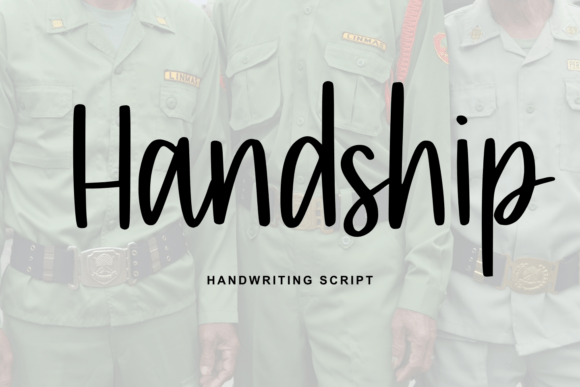
When you first look at Handship, you won’t find the chaotic loops or illegible swashes that plague many handwritten font styles. Instead, you will notice a deliberate simplicity. The charm of this typeface lies in its consistency. While it mimics the irregularities of human writing, it does so with restraint. The strokes are smooth but not sterile, capturing the essence of a steady hand writing on quality paper. This visual characteristic is vital. Too often, designers choose a script font that looks beautiful in a headline but falls apart when applied to longer text or smaller sizes. Handship avoids this trap by prioritizing the baseline and x-height, ensuring that the "handwriting" remains legible even when the text gets dense.
The personality of the font is inherently friendly and approachable. It does not carry the aggressive energy of a graffiti style, nor the stuffiness of a traditional copperplate script. It sits in a comfortable middle ground, making it a premium font choice for brands that want to speak to their audience rather than at them. Think of it as the visual equivalent of a warm smile and a firm handshake. It conveys confidence without arrogance, and creativity without chaos. For a small business owner trying to build trust, or a blogger looking to connect with readers on a personal level, this subtle emotional cue is invaluable. It suggests that behind the brand, there are real people who care about their craft.
Practical Applications: From Brand Identity to Digital Interfaces
Understanding where to deploy a creative font like Handship is just as important as the font itself. Its utility spans a wide array of mediums, but it shines brightest where a human connection is the primary goal.
Logo Design and Brand Identity
In logo design, Handship acts as a powerful differentiator. If you are building a brand identity for a boutique coffee shop, a lifestyle coaching business, or a handmade jewelry line, a rigid sans serif might feel too corporate. Handship provides that artisanal quality. It works exceptionally well as a wordmark or paired with a simple sans serif font for the tagline. This combination creates a visual hierarchy that guides the viewer's eye—Handship draws attention to the brand name with its unique texture, while the supporting text provides clear information.
Editorial and Packaging Design
For those in editorial design or packaging design, the font offers a way to break the monotony of body copy. Imagine a magazine spread about travel or wellness; using Handship for pull quotes or section headers adds a layer of intimacy that a standard serif font cannot replicate. In packaging, particularly for food, cosmetics, or artisanal goods, the font signals "handmade" and "quality." It elevates the product before the customer even opens the box. It turns a label into a personal recommendation from the maker.
Digital Presence: Web and Social Media
In the realm of web design and social media graphics, readability is king. However, engagement is the queen. Handship helps you win on both fronts. On a website, it works best for call-to-action buttons or short, punchy headlines that need to feel inviting. It softens the digital experience. On platforms like Instagram or Pinterest, where visuals are consumed rapidly, a handwritten font stops the scroll. It mimics the look of a text message or a handwritten letter, which psychologically encourages the viewer to read the content. It is a subtle hack for increasing audience engagement without resorting to clickbait tactics.
Strategic Implementation: Typography, Pairings, and Hierarchy
As a design professional, I treat typography as a system, not just a collection of letters. Handship is a component of that system, and using it effectively requires a strategy regarding font pairing and visual hierarchy.
Finding the Perfect Partner
Because Handship has a distinct organic texture, it pairs best with clean, geometric typefaces. A classic combination is Handship alongside a modern sans serif font like Montserrat or Open Sans. The contrast between the organic curves of the script and the mathematical precision of the sans serif creates a balanced composition. Avoid pairing it with highly decorative display fonts or overly ornate serifs, as this will result in visual clutter. The goal is to let Handship provide the emotion while its partner provides the structure. This is the essence of good modern typography.
Readability and Visual Flow
One of the most common mistakes with script fonts is overuse. You should rarely, if ever, set a full paragraph in Handship. It is designed for impact, not endurance. Use it for H1, H2, or H3 headings, or for short bursts of text like a "Thank You" note on a receipt or a quote on a poster. By using it sparingly, you maintain its impact. When a viewer sees the handwritten style, it should feel like a special highlight, not a chore to read. This selective application ensures your brand identity remains professional while still feeling personal.
Making the Choice: Licensing and Project Fit
When selecting design assets, the technical details matter as much as the aesthetic ones. Handship is a commercial font, which means it comes with the licensing required for professional work. This is a crucial distinction for entrepreneurs and agencies. Using free fonts from dubious sources can lead to legal headaches down the road, especially when scaling a business or registering a trademark. Investing in a premium font like Handship ensures that you have the legal right to use the typeface across all your commercial projects, from packaging design to paid advertisements.
Before fully committing to the font for a major project, I always recommend testing it in context. Don't just look at the alphabet on a specimen sheet. Type out your actual headlines. Test it on your mobile device to see how the handwritten font renders on different screen resolutions. Check the kerning (the space between letters) to ensure it flows naturally. Look at the included styles—does it have the punctuation and special characters you need for your specific language or industry? Handship is built to be robust, but due diligence is the mark of a professional.
Ultimately, Handship is more than just a display font; it is a communication tool. It bridges the gap between the digital and the analog, bringing a sense of humanity back into our designs. Whether you are crafting a logo for a new startup, designing a wedding invitation, or creating a layout for a lifestyle blog, Handship offers that rare combination of simplicity and elegance. It proves that you don't need complex effects to make a design feel special—sometimes, all you need is a touch of authentic, natural handwriting.