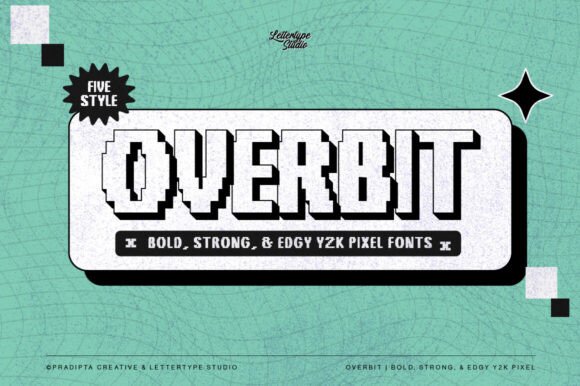
Overbit: The Pixel Y2K Font for Bold, Retro Designs
There’s a certain energy to the digital aesthetics of the late 90s and early 2000s. It’s a blend of chunky pixel art, bold outlines, and a playful, almost rebellious confidence. Capturing that vibe in modern design requires a specific tool, and that’s where a typeface like Overbit steps in. This isn't just another retro font; it's a purpose-built display font that channels the bold, edgy spirit of Y2K and 80s pixel culture, making it a potent asset for designers looking to inject nostalgia and impact into their work.
Anatomy of a Digital Throwback
Overbit is a premium font that immediately announces its personality. Its character shapes are constructed from a visible pixel grid, but with a crucial twist: the forms are exaggerated and stylized, giving it a contemporary edge rather than a literal recreation of old-school system fonts. The result is a typeface that feels both familiar and fresh. It carries the weight and presence needed for headlines while maintaining a distinct, tech-inspired character.
The font family includes five essential styles—Regular, Outline, Italic, Shadow, and Shadow Bold—providing a versatile toolkit for layering and emphasis. This variety allows for dynamic typographic hierarchies. Imagine using the bold shadow style for a main headline and the clean outline style for a subheading, all within the same visual language. Furthermore, its multilingual support makes it a practical choice for global projects, ensuring brand consistency across different language markets.
Where Overbit Truly Shines: Practical Applications
Understanding a font's personality is one thing; knowing where to deploy it is where strategy comes in. Overbit excels in scenarios where grabbing attention and conveying a specific, bold mood is the primary goal.
- Logo Design & Brand Identity: For brands in gaming, tech, streetwear, music, or any sector targeting a younger, culturally aware audience, Overbit can form the cornerstone of a powerful brand identity. Its edgy look is perfect for creating memorable logos, especially for startups or projects that want to stand out from the minimalist sans serif crowd.
- Web Design & Digital Interfaces: This font is a natural fit for hero sections, call-to-action buttons, and navigation elements on websites aiming for a retro-futuristic or gaming aesthetic. It’s equally effective in designing 8-bit game interfaces, menu screens, and achievement notifications.
- Editorial & Publishing: In editorial design, Overbit can create striking chapter titles, pull quotes, or feature headlines in magazines, blogs, and digital publications focused on pop culture, technology, or vintage trends.
- Marketing & Social Media: For social media graphics, event posters, and digital ads, its high-impact style ensures messages cut through the noise. It’s particularly effective for announcements, product launches, and promotional content where a playful yet impactful touch is needed.
- Packaging & Print: While digital-first, Overbit translates well to print for packaging design, merchandise (like t-shirts and stickers), posters, and limited-edition product labels where a bold, retro statement is desired.
Integrating Overbit: Strategy Over Style
Simply liking a font's look isn't enough. Effective use requires strategic thinking about readability, context, and pairing. Here’s how to approach Overbit with a professional mindset.
Evaluating Project Fit
Ask yourself: does the project's personality align with Overbit's? It’s a poor choice for a law firm's annual report or a luxury wellness brand’s website. However, it’s an outstanding choice for a music festival poster, a mobile game’s UI, a YouTube channel banner, or a streetwear brand’s logo. The key is matching the font's inherent energy to the project's desired tone.
Mastering Font Pairings
A display font like Overbit is rarely used for body text. Its strength is in headlines and short bursts of text. For longer paragraphs, you need a reliable partner. Pair it with a clean, highly legible sans serif font or even a simple serif font for contrast. The goal is balance: let Overbit deliver the punch, and let its partner handle the detailed information with clarity. Avoid pairing it with other ornate script fonts or handwritten fonts, which can create visual chaos.
Considering Readability and Hierarchy
Overbit's pixel construction means it performs best at larger sizes. At very small sizes, the distinct pixel details can blur, reducing legibility. This is why it’s categorized as a display font—use it for impact, not for fine print. Leverage its different styles to build a clear visual hierarchy. The Shadow Bold style can dominate a page, while the Regular or Italic can support it in subheadings or pull quotes.
Testing and Commercial Use
Always test the font in context. Mock up your headline in your actual design layout to see how it interacts with imagery, colors, and other design assets. Check the specific commercial font license to ensure it covers your intended use, whether for a client project, merchandise, or a digital product. A creative font like Overbit is an investment, and understanding its licensing is part of professional practice.
In a landscape saturated with clean, geometric typefaces, Overbit offers a refreshing dose of character and nostalgia. It’s a tool for designers who want to make a statement, evoke a specific era, and create work that resonates with a sense of digital history and bold creativity. By applying it thoughtfully, you can harness its unique power to elevate projects from ordinary to unforgettable.