Dearheart: A Font Duo for Designs That Feel Human
There’s a certain magic that happens when you find a typeface that doesn’t just sit on a page, but actually speaks. It’s the difference between a design that’s merely competent and one that connects, that feels personal and intentional. In a world saturated with sterile digital text, the handwritten touch carries immense weight. It’s a signal of authenticity, warmth, and a human hand behind the pixels. This is precisely the space where the Dearheart font duo lives, offering a potent blend of charm and utility for creators who want their work to resonate on a more personal level.
Understanding the Dearheart Duo: More Than Just a Pretty Font
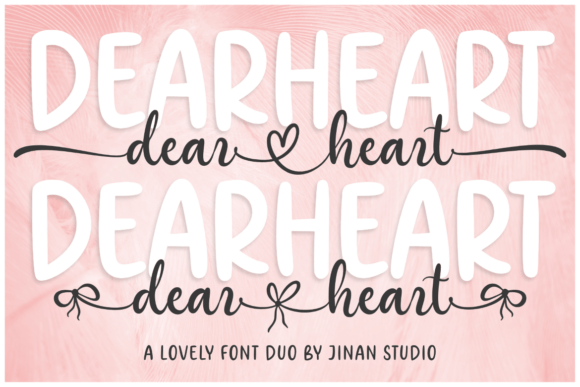
At its core, Dearheart is a thoughtfully crafted pair. You get a bold, confident handwritten display font that commands attention. Its letters are formed with a consistent, playful rhythm—think of a skilled sign-writer’s casual but assured strokes. This is your headline hero, your logo anchor, your go-to for statements that need to be seen and felt immediately.
Paired with it is a sweet, flowing script. This isn’t a formal calligraphic piece; it’s softer, more approachable, with smooth curves and a gentle baseline that feels like it was written with a favorite pen. The real delight, however, is in the details. The font family includes heart-themed swashes and alternates, subtle flourishes that can be added to the beginnings or ends of letters. These aren’t gaudy; they’re playful accents that allow you to inject a unique personality into each project. Because it’s PUA-encoded, accessing these special characters, swashes, and alternates is effortless—no advanced software skills required. You can simply copy and paste them from your character map.
Where Dearheart Truly Shines: Practical Applications
The versatility of a creative font duo like this is its greatest strength. It’s not a one-trick pony. Its applications span the tangible and the digital, the commercial and the personal.
For brand identity and logo design, Dearheart offers a fantastic starting point for businesses that want to project approachability, craftsmanship, or whimsy. Imagine a boutique bakery, a handmade jewelry shop, a children’s clothing line, or a cozy café. The bold display font works brilliantly for the primary logotype, while the script can be used for a tagline or supporting text, creating an instant visual hierarchy and personality. It’s a premium font that helps small brands achieve a professional, cohesive look without the custom typography price tag.
In editorial design and packaging, the duo adds a layer of tactile quality. Use the display font for chapter titles in a cookbook or a lifestyle magazine. The script is perfect for pull quotes, sidebar headings, or annotations that feel hand-noted. On product packaging—think artisanal soaps, gourmet snacks, or seed packets—it communicates care and quality before the customer even reads a word. The consistent style ensures your brand identity remains strong across all touchpoints.
Digital applications are equally robust. For social media graphics, Dearheart cuts through the noise. A bold, handwritten statement in a Facebook ad or an Instagram story feels more immediate and engaging than standard text. The script is ideal for longer, more intimate captions or quote graphics. For web design, use it sparingly for key headlines, calls-to-action, or special announcements to inject personality without sacrificing site-wide readability. It’s a fantastic tool for marketers and bloggers looking to create visually distinct Pinterest pins or email headers that stand out in a crowded feed.
Making the Right Choice: A Practical Guide
Adopting a new typeface, especially a display-driven one like Dearheart, requires a bit of strategy. Here’s how to evaluate it for your work.
First, consider your project’s core message. Dearheart’s personality is charming, warm, and handmade. It’s a superb fit for brands and projects that want to evoke those feelings. It might not be the right choice for a law firm or a fintech startup aiming for a tone of austere authority, but it’s perfect for anything in the lifestyle, wellness, food, craft, or family space.
Next, think about font pairing. This is critical. Because Dearheart’s display and script fonts are so distinctive, they need a grounding partner. The best companions are often simple, clean sans serif fonts or even a classic, neutral serif font. Use the sans serif for body copy or longer paragraphs where readability is paramount. This contrast creates a clear visual hierarchy: the expressive Dearheart for emotional impact, and the neutral partner for clear communication. Never pair two highly decorative fonts together; it creates visual chaos.
Practically, test the font in context. Don’t just look at the alphabet. Type out actual headlines, names, or phrases you’ll use. Check the spacing and how the letters connect, especially in the script. Make sure the swashes and alternates enhance, not clutter, your message. Always review the full character set provided to understand the creative possibilities fully.
Finally, a note on licensing. If you’re using Dearheart for client work, merchandise, or any commercial project, ensure you have the correct commercial license. This is non-negotiable for professional practice and protects both you and the font designer. Treating design assets like fonts with professionalism elevates your entire workflow.
In the end, Dearheart is more than just a handwritten font. It’s a design asset that facilitates connection. It helps you build a brand identity that feels genuine, create marketing materials that engage, and produce designs that carry a distinct, human warmth. By understanding its personality and applying it thoughtfully, you can leverage its charm to make your creative work more memorable and effective.