Bring the 70s Back: Designing with Autumn Groove Retro
There is a distinct feeling you get when you encounter a typeface that refuses to whisper. While modern design often leans toward the minimalist and the clean, there are moments where your project demands noise—specifically, the kind of joyful, rhythmic noise that defined the 1960s and 70s. This is exactly where Autumn Groove Retro enters the conversation. It isn’t just a font; it is a time machine for your typography. If you are working on a project that needs to feel energetic, nostalgic, and undeniably bold, understanding how to wield this specific aesthetic is crucial.
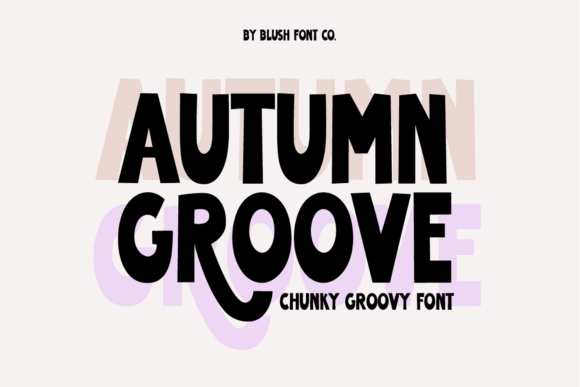
As a premium font, Autumn Groove Retro is designed as a display typeface. This is a critical distinction to make early on. You wouldn’t use this for body copy in a long-form blog post or a dense technical manual. Its power lies in its "chunky" nature—oversized letterforms with soft, playful curves that mimic the hand-lettered feel of vintage psychedelic posters and disco-era branding. It captures a groovy energy that is both cheerful and commanding. When you look at the letter spacing and the weight of the strokes, you see a typeface built for impact. It is designed to sit at the top of a hierarchy, drawing the eye immediately before handing the reader off to a more neutral sans serif font or serif font for the details.
Where the Vibe Fits: Practical Applications
Knowing what a font looks like is one thing; knowing where to deploy it is the job of a professional. The versatility of Autumn Groove Retro lies in its ability to bridge the gap between personal projects and commercial branding. Because the 70s aesthetic is currently seeing a massive resurgence in contemporary design, this font is incredibly relevant for a wide array of applications.
For entrepreneurs and small business owners, this typeface is a secret weapon for packaging design. If you are selling artisanal goods, coffee, cosmetics, or even boutique clothing, the retro vibe communicates warmth and authenticity. Imagine a coffee bag with "Morning Brew" set in Autumn Groove; it instantly suggests a comforting, hand-crafted product. It works exceptionally well for logo design where the goal is to appear approachable yet distinct. However, a logo needs to be legible at small sizes, so ensure the curves don’t close up if you shrink the mark down for a favicon.
In the realm of editorial design and publishing, bloggers and content creators can use this font to create social media graphics that stop the scroll. Instagram stories and Pinterest pins thrive on visual hierarchy. Using Autumn Groove for a headline like "Summer Sale" or "New Collection" creates a focal point that a standard modern typography choice might miss. It is also excellent for web design hero sections, specifically for seasonal campaigns or landing pages that need a burst of personality.
Strategic Pairings and Hierarchy
One of the challenges with a creative font like Autumn Groove is managing the visual noise. If everything on the page is shouting, nothing gets heard. This is where your font pairing strategy comes into play. Because Autumn Groove is so stylistic and dense, it requires a partner that is quiet, clean, and structural.
A geometric sans serif font is often the best companion here. Think of typefaces like Futura, Montserrat, or even a clean script font if you want to lean into a feminine, retro aesthetic. The contrast between the chunky, rounded display font and a sharp, linear body text creates a professional visual hierarchy. This ensures your brand identity feels cohesive. You are using the display font to establish the mood (the emotion) and the secondary font to deliver the information (the logic).
Technical Execution and Usability
When investing in a commercial font, technical details matter as much as the visual style. Autumn Groove Retro is PUA-encoded (Private Use Areas). For designers, this is a significant practical benefit. It means that all those extra glyphs, swashes, and alternate characters are accessible even in basic design software that doesn't support OpenType features natively.
This accessibility allows you to customize your design assets easily. You can swap out a standard "R" for one with a decorative swash to make a title feel more unique without needing advanced coding or complex software settings. This flexibility is vital for creating dynamic t-shirt designs or retro posters where every letter needs to feel intentional. Before finalizing a design, always test how these alternates interact with each other to avoid awkward kerning or overlapping loops, which can happen with handwritten fonts or stylized display types.
Making the Decision
Choosing a typeface is about evaluating the fit between the tool and the message. Ask yourself: Does my project need to feel energetic? Is the target audience responsive to nostalgia? Does the brand voice lean towards fun rather than corporate austerity?
If the answer is yes, Autumn Groove is likely a strong candidate. It adds an instant dose of "feel-good" energy that sterile, corporate fonts cannot replicate. However, readability must remain your north star. Test the font at the specific size it will be viewed. A display font that looks great on a billboard might turn into a blob on a mobile screen. By respecting the font's strengths—its boldness and its retro character—you can create visuals that don't just look good, but effectively communicate the story you want to tell.